

Portable Rooftop Lifting Hoists for Construction, HVAC, Glass, Steel, and Building Maintenance
When evaluating a rooftop lifting hoist, most contractors start by asking a simple question:
"What is the heaviest load I need to lift?"
While lifting capacity is important, experienced contractors know the bigger challenge is often something else entirely.
How do you get lifting equipment to the work area?
In modern construction, building maintenance, HVAC installation, facade restoration, glazing, and mechanical projects, access is frequently the real obstacle. Dense urban environments, occupied buildings, limited staging areas, narrow streets, rooftop obstructions, and restricted access points can make traditional crane operations difficult, expensive, or impractical.
Many rooftop lifting projects involve loads under 2,000 pounds. The materials themselves are manageable. The challenge is raising those building materials safely and efficiently while minimizing labor, reducing mobilization costs, and maintaining precise control during installation.
This is where portable lifting systems, mini cranes, mobile hoists, material hoists, rooftop hoists, and compact lifting equipment have become valuable tools for contractors across North America.
Rather than bringing the building to the crane, Microcranes® allow contractors to bring the mini crane directly to the building.
Access Is Often More Important Than Capacity
Large lifting equipment certainly has its place. However, many rooftop projects involve materials that fall well within the lifting range of a compact portable mini crane.
Common materials include:
- Structural steel beams
- Miscellaneous steel
- Fabricated steel assemblies
- Steel plates
- Pipe racks
- Mechanical skids
- HVAC units
- Air handlers
- Chillers
- Condensers
- Pumps
- Motors
- Generators
- Blowers
- Cooling towers
- Electrical switchgear
- Electrical panels
- Transformers
- Cable trays
- Ductwork
- Pipe spools
- Glass panels
- Curtain wall systems
- Architectural glazing
- Architectural cladding
- Metal facade panels
- Roofing materials
- Solar panels
- Equipment platforms
- Water treatment equipment
- Industrial machinery
- Material pallets
- Construction supplies
- Tools and equipment
The challenge is rarely finding enough lifting capacity.
The challenge is getting the lifting equipment into position.
Lightweight Design Creates New Possibilities
One of the biggest advantages of the Microcranes® approach is weight.
Many compact lifting systems, crawler cranes, mini cranes, swing hoists, derrick cranes, specialty lifting equipment, and mounted davit crane systems weigh several thousand pounds before transportation equipment, counterweights, and accessories are considered.
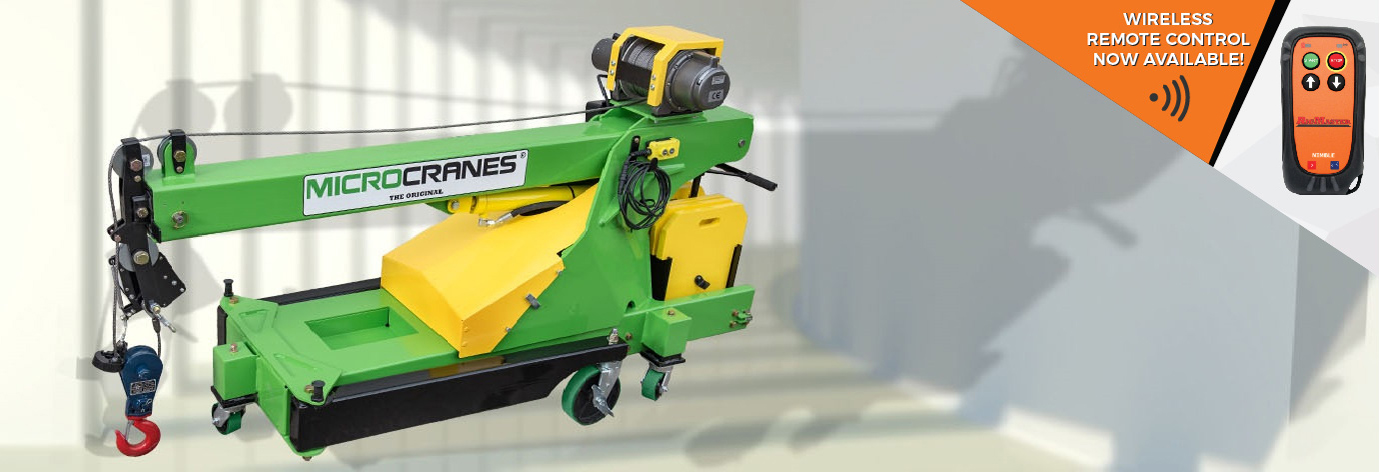
The M1 model weighs approximately 1,800 pounds while providing lifting capacities up to 2,000 pounds.
That lightweight design creates significant advantages throughout a project.
Depending on site conditions, a Microcranes® unit may be:
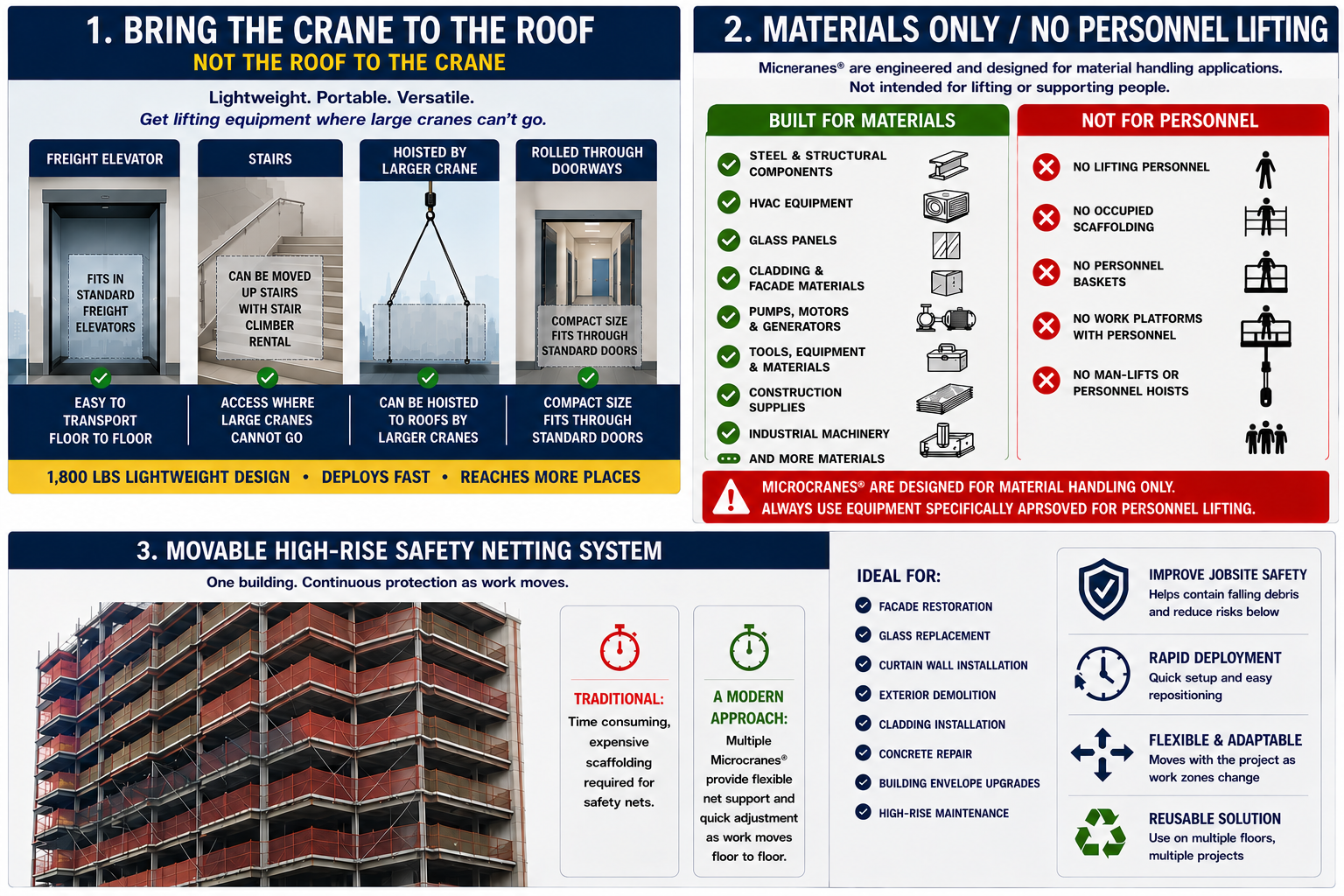
- Transported through standard commercial doorways
- Moved through hallways
- Taken floor-to-floor in freight elevators
- Relocated across occupied facilities
- Transported using rented stair-climbing equipment
- Hoisted to rooftops by larger cranes
- Positioned in mechanical penthouses
- Deployed in restricted-access work areas
- Used where larger lifting equipment cannot physically fit
For many contractors, the ability to move the crane itself becomes just as valuable as the lifting capacity.
Raise Materials Where Large Cranes Cannot Reach
Urban construction projects frequently present challenges that traditional crane operators encounter every day.
- Narrow streets
- Limited staging areas
- Underground utilities
- Traffic restrictions
- Adjacent buildings
- Pedestrian zones
- Occupied facilities
- Rooftop obstructions
- Mechanical penthouses
- Courtyards
- Atriums
Portable rooftop lifting systems provide a practical alternative.
Instead of occupying valuable street space, contractors can position lifting equipment directly at the point of work.
This can simplify projects involving:
- High-rise construction
- Mechanical upgrades
- Building modernization
- Facade restoration
- Glass replacement
- Curtain wall installation
- Cladding installation
- Roofing projects
- Solar panel installation
- Industrial maintenance
In many situations, accessibility becomes the deciding factor rather than lifting capacity.
Precision Matters During Installation
Successful lifting operations are not simply about raising a load.
They are about positioning a load safely and accurately.
A rooftop HVAC unit may weigh 1,500 pounds, but once it reaches the roof, installers need precise control to position it correctly.
The same is true for glass panels, curtain wall systems, steel assemblies, pumps, motors, electrical equipment, mechanical skids, and architectural components.
Microcranes® can provide variable-speed winch control with lowering speeds approaching one foot per minute.
That level of precision helps reduce:
- Load swing
- Product damage
- Installation errors
- Rework
- Crew fatigue
- Placement time
Plug Into Building Power and Keep Working
Battery-powered lifting systems provide flexibility, but runtime limitations can become a concern on longer projects.
Microcranes® can operate from battery power or standard electrical service.
The ability to plug directly into available building power provides several benefits:
- Continuous operation
- No battery change delays
- Quiet operation
- Zero exhaust emissions
- Reduced maintenance requirements
- Improved indoor usability
- Ideal performance in occupied buildings
Hospitals, airports, data centers, manufacturing facilities, government buildings, schools, and commercial structures often benefit from electric lifting equipment because of these advantages.
Ground Pressure Can Be the Real Limitation
One of the most overlooked considerations during rooftop lifting is ground pressure.
Contractors often focus entirely on lifting capacity while overlooking floor loading and roof loading requirements.
A lightweight lifting system can simplify deployment and create more options during lift planning.
Because the M1 weighs approximately 1,800 pounds, it may offer advantages in applications where heavier lifting equipment creates structural concerns.
Every project should be reviewed by qualified personnel, but lightweight equipment often provides greater flexibility when planning rooftop lifts.
Proper use of outrigger pads and load distribution methods remains essential for safe operation.
Advantages Over Fixed Davit Crane Systems
Mounted davit cranes are commonly used for building maintenance applications.
However, permanent davit systems generally serve fixed locations and fixed working areas.
Portable lifting systems offer several advantages:
- No permanent rooftop modifications
- Can be used on multiple buildings
- Easily repositioned
- Adaptable to changing project requirements
- Useful for temporary construction projects
- Lower infrastructure investment
- Greater jobsite flexibility
- Improved equipment utilization
More Than a Rooftop Hoist
A Microcranes® system can function as much more than a rooftop lifting hoist.
- Mini crane
- Portable crane
- Mobile hoist
- Material hoist
- Construction hoist
- Mechanical installation system
- Maintenance lifting system
- Glass installation crane
- Cladding installation crane
- Restricted-access crane
- Industrial lifting solution
The same equipment used for a rooftop HVAC installation today may be used tomorrow to lower a pump into a utility vault, install steel components, replace industrial machinery, or position architectural glass.
Material Handling Equipment Only
Microcranes® are designed specifically for material lifting applications.
Typical uses include lifting:
- Steel components
- Mechanical equipment
- HVAC systems
- Pumps
- Motors
- Generators
- Glass panels
- Curtain wall systems
- Cladding materials
- Electrical equipment
- Industrial machinery
- Construction materials
Microcranes® are not intended for lifting personnel, transporting workers, supporting occupied scaffolding, suspending work platforms with personnel, or serving as a personnel hoist.
Personnel lifting applications should always utilize equipment specifically engineered, rated, and approved for human occupancy.
Temporary Safety Netting Support for High-Rise Construction
Portable lifting systems can also support unique construction applications beyond material handling.
On facade restoration projects, glazing projects, exterior demolition work, and building envelope upgrades, multiple Microcranes® can be positioned to support temporary debris containment and safety netting systems.
As work progresses up or down the building, the netting system can be raised, lowered, or repositioned to follow the active work zone.
- Facade restoration
- Glass replacement
- Curtain wall installation
- Exterior demolition
- Concrete repair
- Building envelope upgrades
- Cladding installation
- High-rise maintenance
Lower Loads as Deep as 135 Feet
Most lifting equipment discussions focus on raising materials.
However, lowering capability can be equally important.
Microcranes® can support lowering applications reaching depths of approximately 135 feet.
- Utility vault projects
- Pump stations
- Water treatment facilities
- Wastewater facilities
- Elevator shafts
- Deep excavations
- Underground infrastructure
- Mechanical rooms
- Confined-space maintenance projects
Rooftop Lifting Implementation Checklist
Access Planning
- Confirm doorway widths
- Verify elevator dimensions and capacities
- Measure hallways and turning clearances
- Identify rooftop access points
- Review stair access requirements
- Confirm transportation methods
Ground Pressure Planning
- Confirm allowable bearing pressure
- Calculate expected leg loads
- Determine required pad sizes
- Verify load distribution methods
- Review structural limitations
Lift Planning
- Confirm maximum load weight
- Verify lift radius
- Confirm required hook height
- Identify obstructions
- Establish tag-line procedures
- Define communication methods
Environmental Conditions
- Establish wind thresholds
- Confirm acceptable roof slopes
- Review weather conditions
- Identify sail-area loads such as glass and panels
Equipment Verification
- Program controller presets
- Verify control operations
- Verify winch performance
- Review load charts
Pre-Lift Procedure
- Conduct a dry lift several feet above ground
- Verify load balance
- Confirm stability
- Check outrigger pads if needed
- Compare actual conditions to lift plan
Post-Lift Documentation
- Log lift radius
- Record pad configurations
- Record wind conditions
- Note alarms or warnings
- Capture lessons learned for future lifts
Choosing the Right Rooftop Lifting System
- What materials need to be lifted?
- What is the heaviest load?
- How high must the load be raised?
- Does the project require lowering below grade?
- Is rooftop access available through an elevator?
- What are the roof loading limitations?
- Are there ground pressure concerns?
- Is electric operation preferred?
- Does the project require precision placement?
- Will the equipment be used on multiple projects?
- Is rapid deployment important?
- Are crane mobilization costs a concern?
The answers often reveal that the biggest challenge is not lifting the load.
The biggest challenge is getting lifting equipment to the work area safely, efficiently, and economically.
That is where a lightweight portable crane system can deliver advantages that traditional lifting methods simply cannot match.
```One Mini Crane. Hundreds of Applications. Thousands of Opportunities to Save Time and Money.
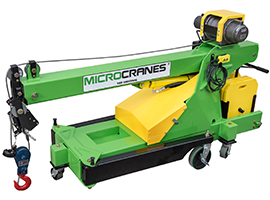
Compact Crane
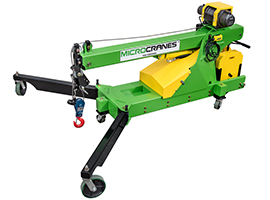
Outrigger Legs
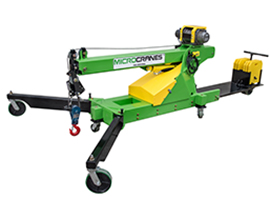
Counterweight Extended