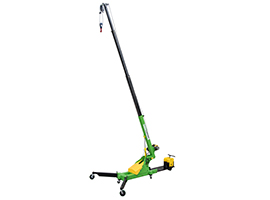


Keeping Critical Infrastructure Running
The energy and utilities industry depends on reliability. Every day, power plants, substations, water treatment facilities, wastewater facilities, solar farms, battery storage systems, data centers, and industrial energy facilities must remain operational while supporting homes, businesses, hospitals, manufacturing facilities, transportation systems, and public infrastructure.
Behind every reliable facility is a maintenance team responsible for keeping critical systems operating safely and efficiently.
These teams face a common challenge: moving heavy equipment inside facilities where traditional lifting equipment often cannot operate.
Unlike construction projects, utility maintenance rarely occurs in open spaces. Equipment must frequently be removed, repaired, upgraded, or replaced inside crowded facilities filled with electrical systems, process equipment, piping, mechanical systems, communications infrastructure, and existing machinery.
Access is often the biggest challenge.
Forklifts may not fit through doorways. Gantry cranes may require more floor space than available. Chain hoists require overhead support structures that may not exist. Large crane rentals often involve significant mobilization costs, traffic control, scheduling delays, and additional personnel.
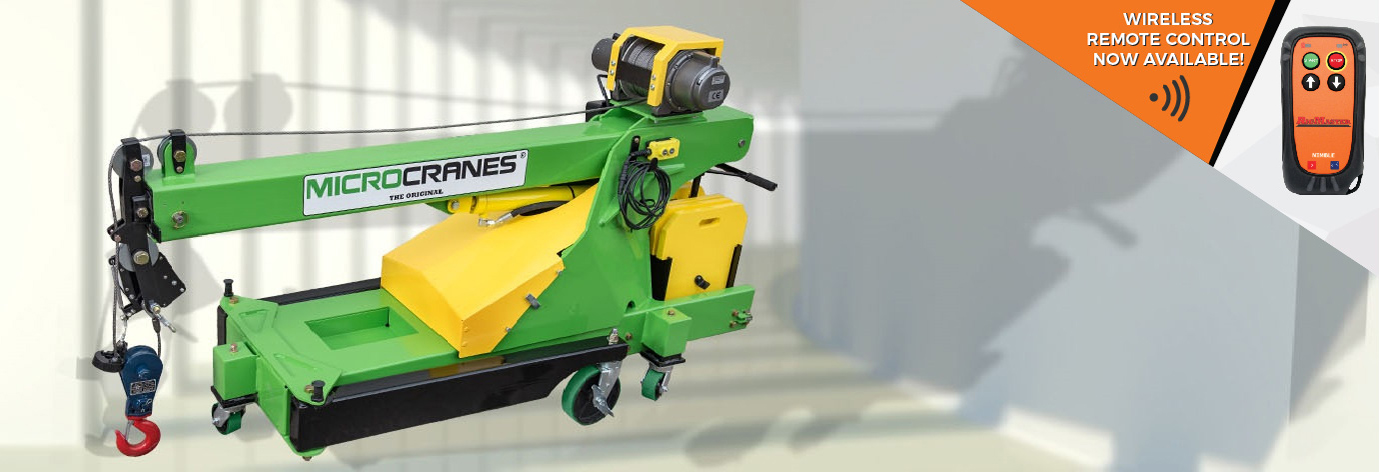
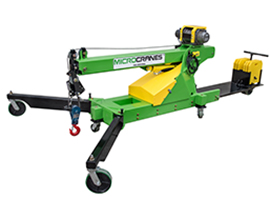
Microcranes® provide a practical alternative.
- Up to 2,000 lb lifting capacity
- Up to 27 ft lifting height
- Up to 135 ft lowering depth
- Battery or 115V electric operation
- Precision variable-speed controls
- Approximately 1,800 lb machine weight
- Zero direct emissions
- Fits through doors and elevators
- Breaks down further for restricted-access transport
Why Utility Maintenance Is Different
Utility facilities evolve over decades.
Equipment originally installed during construction may remain in service for twenty, thirty, or even fifty years. As systems are upgraded, new equipment is added while old infrastructure remains in place. Mechanical rooms become crowded. Electrical rooms become congested. Access routes become restricted.
Eventually, maintenance teams face a difficult reality: the equipment that needs replacement is often easier to install than remove.
This challenge appears throughout the utility industry:
- Electrical substations
- Power generation facilities
- Solar farms
- Battery energy storage systems
- Water treatment plants
- Wastewater facilities
- Pump stations
- Utility tunnels
- Data centers
- Generator facilities
- Rooftop utility installations
The ability to bring lifting equipment directly to the work area becomes a major advantage.
Microcranes® can often travel through standard commercial doorways, navigate narrow hallways, operate in freight elevators, access rooftops, and reach work areas inaccessible to larger lifting systems.
For highly restricted projects, the crane can be broken down further into smaller assemblies for transportation through difficult access points.

Common Utility Maintenance Lifts
Microcranes® are frequently used for lifting, lowering, positioning, removing, and installing:
- Transformer accessories
- Transformer cooling systems
- Switchgear
- Circuit breakers
- Electrical cabinets
- Relay panels
- Battery systems
- Battery racks
- Battery modules
- UPS systems
- Inverters
- Pumps
- Pump motors
- Blowers
- Mixers
- Valves
- Heat exchangers
- HVAC equipment
- Generator components
- Turbine auxiliaries
- Instrumentation systems
- Communications equipment
- SCADA systems
- Cable reels
- Process equipment
These lifts occur every day throughout utility and industrial infrastructure.
The challenge is rarely the weight. The challenge is getting lifting capability to the equipment.
Utility Outage Maintenance Equipment
Planned outages represent some of the most important maintenance windows within the utility industry.
During a scheduled outage, crews may need to:
- Replace pumps
- Replace motors
- Upgrade switchgear
- Repair generators
- Modernize controls
- Upgrade transformers
- Install instrumentation
- Replace process equipment
Every hour saved during an outage can reduce costs and accelerate facility startup.
Because Microcranes® can often be deployed directly inside the facility, maintenance teams may avoid delays associated with external crane mobilization while reducing dependence on manual rigging methods.
For outage support work, deployment speed matters.
Transformer Replacement and Substation Modernization
Utilities across North America continue investing heavily in substation modernization.
Projects commonly involve:
- Transformer upgrades
- Communications systems
- Battery systems
- Monitoring equipment
- Relay upgrades
- Electrical distribution equipment
- Grid modernization projects
These projects frequently occur inside existing facilities where access is limited.
Maintenance personnel often need precise control when positioning equipment near energized systems, expensive electrical infrastructure, and confined workspaces.
Microcranes® provide variable-speed lifting controls that allow operators to position equipment slowly and accurately.
Precision matters when working around high-value assets.
Switchgear Installation and Electrical Rooms
Switchgear replacement is one of the most common utility modernization projects.
Whether upgrading an aging substation, expanding an industrial facility, or improving power distribution infrastructure, contractors frequently encounter difficult access conditions.
Common equipment includes:
- Medium-voltage switchgear
- Low-voltage switchgear
- Breakers
- Motor control centers
- UPS systems
- Electrical cabinets
- Monitoring systems
- Relay panels
Many electrical rooms provide little spare space for traditional lifting systems.
The compact footprint of Microcranes® allows equipment positioning inside areas where larger solutions may be impractical.
Pump Stations and Below-Grade Infrastructure
Pump stations represent one of the strongest applications for Microcranes®.
Water and wastewater utilities frequently maintain:
- Vertical turbine pumps
- Submersible pumps
- Motors
- Valves
- Mixers
- Screens
- Blowers
- Guide rail systems
Many installations occur below grade.
Microcranes® provide lowering depths up to 135 feet, allowing maintenance teams to lower and retrieve equipment while maintaining precise load control.
Few portable lifting systems offer comparable lowering capability.
Water and Wastewater Infrastructure
Water treatment and wastewater facilities operate continuously.
Maintenance projects often involve equipment located inside:
- Wet wells
- Lift stations
- Pump galleries
- Process buildings
- Mechanical rooms
- Chemical feed systems
The combination of compact size, lightweight design, and lowering capability creates substantial advantages in these environments.
When access is difficult, portability becomes critical.
Battery Energy Storage Systems
Battery Energy Storage Systems require ongoing maintenance involving:
- Battery modules
- Battery cabinets
- Battery racks
- Cooling systems
- Inverters
- Power conversion systems
- Transformers
- Electrical cabinets
Many BESS facilities contain narrow aisles and restricted workspaces.
Because Microcranes® operate using battery or electric power and produce zero direct emissions, they are particularly well suited for indoor battery storage environments.
Solar Energy Maintenance
Solar energy facilities require ongoing maintenance throughout their operational life.
Common activities include:
- Inverter replacement
- Transformer servicing
- Monitoring equipment installation
- Electrical upgrades
- Battery integration projects
- Rooftop solar maintenance
Commercial rooftop projects often present significant access challenges.
Microcranes® can frequently be transported through freight elevators and deployed directly on rooftops.
This capability may reduce dependence on large crane rentals while improving project flexibility.
Data Center Infrastructure
Data centers represent one of the fastest-growing infrastructure sectors.
Common lifts include:
- UPS systems
- Battery systems
- Switchgear
- Transformers
- Electrical cabinets
- Cooling systems
- Power distribution equipment
These facilities often require zero-emission operation, low floor loading, quiet performance, precision positioning, and clean operation.
Microcranes® align closely with these requirements.
Why Access Matters
Many maintenance projects begin with a simple question: how do we get the lifting equipment to the work area?
This challenge often determines project success.
- Standard doorway access
- Freight elevator compatibility
- Rooftop access capability
- Reduced floor loading
- Restricted-access deployment
- Break-down transport capability
At approximately 1,800 pounds, the machine remains significantly lighter than many alternative lifting systems.
Reach Up 27 Feet
Utility maintenance frequently requires lifting above existing equipment.
Microcranes® provide lifting heights up to 27 feet for generator maintenance, HVAC replacement, utility upgrades, electrical installations, and mechanical positioning.
Reach Down 135 Feet
Lowering capability is often overlooked.
Yet many utility projects occur below grade.
Microcranes® can lower loads up to 135 feet into utility vaults, pump stations, wet wells, utility tunnels, water treatment facilities, and wastewater facilities.
This capability is one of the most unique advantages offered by Microcranes®.
Why Utility Professionals Choose Microcranes®
- 2,000 lb lifting capacity
- 27 ft lifting height
- 135 ft lowering depth
- Variable-speed precision lifting control
- Approximately 1,800 lb machine weight
- Fits through standard doorways
- Elevator-friendly design
- Breaks down for restricted-access transport
- Battery or electric operation
- Zero-emission performance
- Indoor and outdoor use
- Non-marking tires
- One-person operation
- Rapid deployment
- Made in USA
A Strategic Maintenance Advantage
When gantry cranes require too much floor space, forklifts cannot reach the work area, chain hoists lack suitable overhead support, and large crane rentals become difficult to justify, maintenance teams need another solution.
Microcranes® bridge the gap between manual rigging methods and large-scale crane operations.
From transformer replacement and switchgear modernization to pump station rehabilitation, battery storage maintenance, solar energy projects, water treatment facilities, wastewater infrastructure, data center maintenance, and utility outage support, Microcranes® help maintenance teams perform critical lifting operations where access is limited, downtime is expensive, and precision matters.
For organizations responsible for keeping critical infrastructure operating safely and reliably, portable lifting equipment is more than a convenience—it is a strategic maintenance advantage.
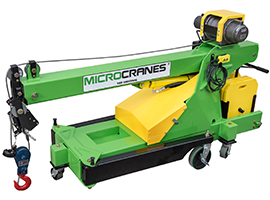
Compact Crane
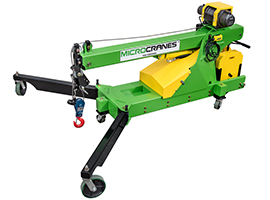
Outrigger Legs
Counterweight Extended