




How to Choose the Right Aircraft Maintenance Crane for Your Hangar
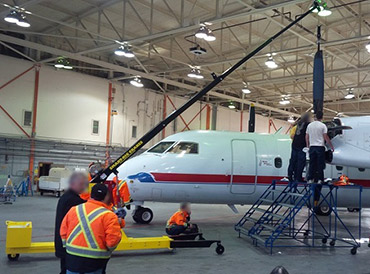
Aircraft maintenance facilities face unique lifting challenges. From engine changes and APU replacements to landing gear repairs and component installations, maintenance teams require lifting equipment that is safe, reliable, and capable of operating in confined hangar environments.
Choosing the right aircraft maintenance crane can improve productivity, reduce downtime, and help protect valuable aircraft components during maintenance operations.
Why Aircraft Maintenance Requires Specialized Lifting Equipment
Unlike general industrial facilities, aircraft hangars often have limited space, multiple aircraft positions, and constantly changing maintenance requirements. Traditional overhead cranes may not provide adequate coverage for every maintenance task, while large mobile cranes can be difficult to position inside hangars.
Aircraft maintenance cranes are designed to provide lifting capability directly where technicians need it most. Portable lifting equipment allows maintenance personnel to move engines, APUs, gearboxes, tooling, and aircraft components without relying on fixed infrastructure.
As aviation maintenance operations continue to focus on efficiency and safety, portable crane systems have become an increasingly valuable tool for maintenance organizations.
Common Aircraft Maintenance Crane Applications
Aircraft maintenance cranes are used for a wide variety of tasks, including:
- Aircraft engine removal and installation
- Jet engine maintenance
- Helicopter engine replacement
- APU servicing
- Landing gear maintenance
- Flight control surface installation
- Aircraft overhaul projects
- Aerospace manufacturing support
- Ground support equipment maintenance
- Military aircraft maintenance
Many maintenance facilities use portable cranes to supplement overhead crane systems and provide greater flexibility throughout the hangar.
Key Features to Look for in an Aircraft Maintenance Crane
Mobility
Aircraft maintenance requirements frequently change throughout the day. A portable crane that can be easily moved between workstations allows maintenance teams to respond quickly to changing workloads.
Look for cranes that offer:
- Compact dimensions
- Easy maneuverability
- Battery-powered operation
- Indoor and outdoor capability
Lifting Capacity
Every maintenance operation has different requirements. Aircraft maintenance cranes should provide sufficient lifting capacity for the intended application while maintaining a compact footprint.
Before selecting a crane, identify the maximum weight of the components being handled and include an appropriate safety margin.
Reach and Hook Height
Aircraft engines and components are often positioned at varying heights. Adequate hook height and boom reach help technicians safely access components while minimizing unnecessary repositioning.
Precision Control
Aircraft components are valuable and often require precise positioning. Quality hoists and lifting controls allow maintenance personnel to make accurate adjustments during installation and removal procedures.
Hangar Accessibility
Many aircraft maintenance facilities have limited access points and congested work areas. Portable cranes that fit through standard doorways and operate in confined spaces can significantly improve maintenance efficiency.
Aircraft Engine Lifting Cranes
One of the most demanding applications in aviation maintenance is aircraft engine removal and installation.
Aircraft engine lifting cranes must provide:
- Reliable lifting performance
- Precise load control
- Excellent maneuverability
- Compact operating dimensions
- Safe operation around aircraft structures
A portable aircraft engine crane allows maintenance teams to position lifting equipment directly where it is needed while minimizing disruption to surrounding operations.
Portable Cranes vs. Overhead Cranes
Overhead cranes are valuable assets in many hangars, but they are not always the ideal solution for every maintenance task.
Portable aircraft maintenance cranes offer several advantages:
- Mobility throughout the facility
- Lower infrastructure costs
- Flexibility for changing maintenance projects
- Access to areas outside crane coverage
- Reduced facility modifications
Many aviation maintenance facilities utilize both overhead cranes and portable cranes to maximize operational flexibility.
Benefits for MRO Facilities
Maintenance, Repair and Overhaul facilities often service multiple aircraft types and require adaptable lifting solutions.
Portable aircraft maintenance cranes help MRO facilities:
- Improve technician productivity
- Reduce equipment setup time
- Increase facility flexibility
- Support multiple maintenance programs
- Enhance workplace safety
As MRO organizations seek to improve efficiency and reduce turnaround times, portable lifting equipment continues to play a critical role in maintenance operations.
Why More Aviation Facilities Are Using Portable Aircraft Maintenance Cranes
Aircraft maintenance organizations are under constant pressure to increase productivity while maintaining strict safety standards. Portable aircraft maintenance cranes provide a practical solution for lifting engines, components, tooling, and assemblies in demanding aviation environments.
Whether supporting commercial airlines, military aviation, helicopter operators, aerospace manufacturers, space industry, or independent MRO facilities, portable crane systems help maintenance teams complete critical tasks safely and efficiently.
For facilities seeking a flexible alternative to fixed lifting systems, a portable aircraft maintenance crane can be one of the most valuable investments in maintenance productivity and operational efficiency.
M1 Global Model Battery Power Floor Crane
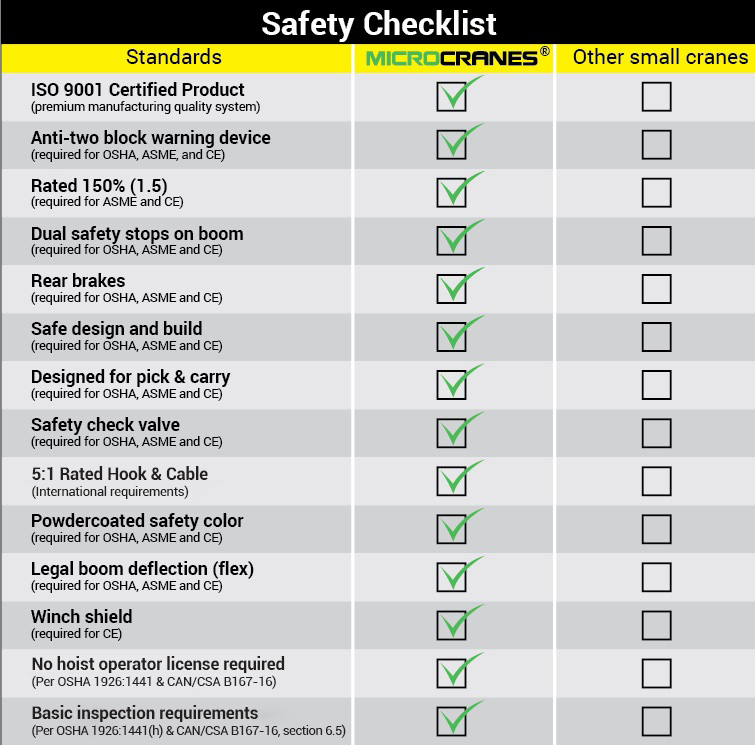
- ISO Certified. Ce Certified. Meets OSHA/PALD/CE Standards.
- Pick & Carry Ability: pushable, reversable
- 2,000 lbs. rated (double or single line)
- Boom 25 ft. hook ht.
- 1.5 safety factor/150% proof
- Hydraulic jack
- Winch shield
- Battery powered 24 volts (mobile)
- 100 ft. of cable
- Heavy duty ASMEB30.5 winch works with hand controls
- Fits through 36 in. doorways
- Fits inside elevators
- Safety stops on boom sections
- Upper limit switch/Anti-two-block
- Easy to operate, turn & maneuver
- 5:1 rated hook with safety latch
- Line speed: 30 FPM
- Pick and carry or reverse materials
- Removeable counterweights
- Air transportable
- Low clearance
- Rapid deployment
- Use on multi aircraft
- Low maintenance
- Use as heli gantry crane/helicopter repairs
- No operator license needed under most North American safety agency 1 ton and under rule